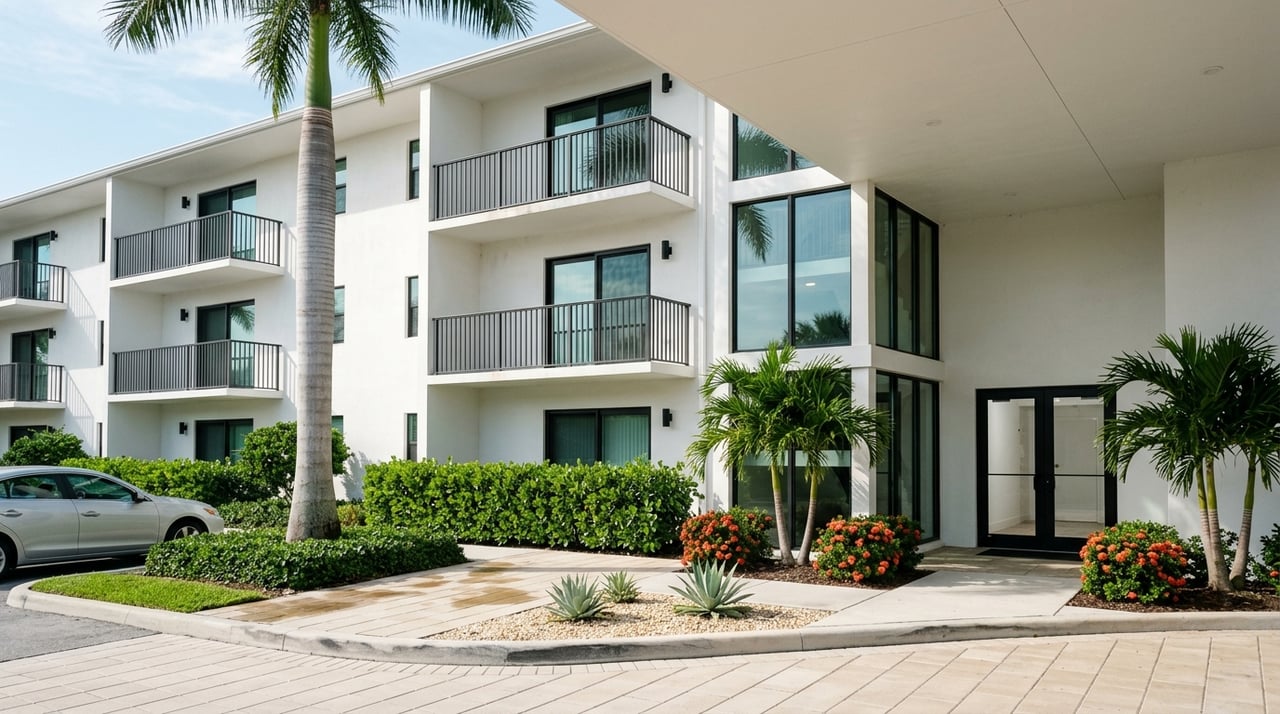
What To Look For In A Coconut Creek Condo Community
May 14, 2026
May 14, 2026
Buying a condo in Coconut Creek can feel simple at first. You see a clean unit, a nice pool, and a monthly fee that seems manageable. But the real story of a condo community often lives beyond the front door. If you want a home that fits your lifestyle and protects your budget, it helps to know what to check before you make an offer. Let’s dive in.
A condo community should work for the way you actually live, not just look good during a showing. In Coconut Creek, location can matter just as much as the unit itself, especially if you want low-maintenance living with easy access to daily needs.
The city highlights practical amenities that many condo buyers value, including 18 city parks, 9 greenways, a Senior Center with activities for residents age 50 and older, and a free shuttle and bus system along Lyons Road and through local shopping areas. MainStreet and Promenade also stand out as a walkable retail and dining area. If you want to drive less, these nearby services can be a real advantage.
Before you focus only on clubhouse features, look at what surrounds the community. A well-located condo can make day-to-day life easier and more enjoyable.
Think about whether you want to be near:
Some buyers want a quiet home base with easy errands nearby. Others want social amenities, recreation, or easier transportation options. In Coconut Creek, comparing communities by access to city services can be just as important as comparing pools, gyms, or clubhouses.
A condo’s monthly fee only tells part of the story. You also need to understand how well the association plans for repairs, maintenance, and future costs.
Florida law requires condominium budgets to include reserve accounts for capital expenditures and deferred maintenance. The law specifically names items like roof replacement, building painting, and pavement resurfacing. Reserve amounts must be based on estimated useful life and replacement cost, which makes reserve funding one of the most important issues to review.
Well-funded reserves can help reduce the chance of surprise costs. If reserves are low, waived, or reduced, owners may face larger financial pressure later.
You should ask:
Florida requires condo associations to keep detailed official records. These records include governing documents, meeting minutes, insurance policies, management agreements, accounting records, audits and financial reports, structural integrity reserve studies, inspection reports, building permits, and bids for work.
This is where you can often spot the difference between a well-run community and one that may have unresolved issues. In a typical Florida resale, buyers must also receive the current governing documents, the latest annual financial statement, the annual budget, and the FAQ sheet. After receiving the required documents, the buyer generally gets a 7-day cancellation window.
A beautiful lobby or fresh paint does not always tell you how well a building has been maintained. In South Florida, building condition deserves close attention, especially in older condo communities.
For many Florida condo buyers, the structural integrity reserve study has become a major part of due diligence. This study is especially important in buildings that are three habitable stories or higher because it focuses on systems tied to future costs and safety.
The required study covers major building components, including:
The study must identify each item, estimate remaining useful life, estimate replacement cost or deferred maintenance expense, and provide a reserve funding plan. For a buyer, that information can offer a much clearer picture of what may need attention in the years ahead.
Florida’s post-Surfside requirements have made inspections a central part of condo due diligence. Residential condominium associations for buildings that are three habitable stories or higher must complete a structural integrity reserve study at least every 10 years. Older buildings may also be subject to milestone inspection deadlines based on age.
Because structural and life-safety inspection reports must be kept for 15 years, buyers should ask for milestone inspection summaries, reserve studies, repair reports, and building permits tied to major projects. These records can help you tell whether a community is simply cosmetically updated or truly maintained.
One of the biggest condo surprises for buyers is learning that maintenance responsibility is not always as obvious as it seems. Florida law makes the association responsible for maintaining common elements unless the declaration assigns a limited common element to the unit owner.
That means you should not assume who pays for exterior items. Instead, review the declaration carefully and ask direct questions before you buy.
You will want clear answers about items such as:
This matters because these items can be expensive to repair or replace. Knowing who is responsible can help you budget more accurately and avoid frustration later.
In Broward County, storm planning is part of smart condo buying. Two issues deserve close review: hurricane protection and flood exposure.
Florida law allows condo boards to require hurricane protection that meets building-code standards, but the declaration controls who installs, maintains, repairs, and pays for removal or reinstallation. You should ask whether the building already has shutters or impact protection and who covers the cost when those components need work.
Broward County’s current flood maps became effective on July 31, 2024. The county says these maps are used by insurance companies and advises property owners and renters to consider flood insurance even when it is not required. The county also notes that all areas are susceptible to flooding to varying degrees.
For you as a buyer, that means the flood zone can affect monthly carrying costs. Even if the condo looks affordable on paper, insurance costs may change the full picture.
Condo rules shape daily life. A community may have a great location and solid finances, but it still needs to match how you live.
Florida’s resale disclosure law makes the governing documents part of the required buyer review. That gives you the chance to look closely at restrictions before you commit.
Pay close attention to rules involving:
These details can have a bigger impact than buyers expect. A condo that looks perfect at first can feel much less practical if the rules do not fit your needs.
If you are considering a community marketed as 55+, do not rely on marketing language alone. A community must meet specific legal standards to qualify as housing for older persons.
Federal rules require at least 80% of occupied units to have at least one resident age 55 or older. The community must also show intent to operate as 55+ housing and use age-verification procedures. HUD makes clear that phrases like adult community are not enough by themselves.
If 55+ status matters to you, ask whether the community’s status is current and documented. Written rules, actual practices, advertising, and age verification all play a role.
This step can help you avoid confusion and make sure the community truly matches what you are looking for.
When you are comparing Coconut Creek condo communities, a simple checklist can keep you focused on what matters most. It can also help you compare one property to another in a practical way.
Here are smart questions to ask before making an offer:
For older buildings that are three stories or higher, the key points are simple: verify reserve funding, verify inspection history, verify maintenance responsibility, and verify age-restriction status when relevant.
Buying a condo in Coconut Creek should feel clear, not overwhelming. When you look beyond the unit and study the community itself, you give yourself a much better chance of finding a home that fits your lifestyle and your budget for the long term. If you want thoughtful, hands-on guidance as you compare communities in Coconut Creek, Jason Jardine is here to help you make a confident move.
Stay up to date on the latest real estate trends.



Maximize your home's appeal and secure a quick, profitable sale in Florida's competitive market.
Partner with a boutique brokerage that values sincerity, accessibility, and treating your goals as our own.